

TL;DR
Comparing Refine Labs alternatives in 2026? The right partner depends on your stage, your budget, and which route to pipeline fits. Here’s our pick:
- Platypus SEO: growth-stage European B2B SaaS that wants organic and AI search tied to pipeline.
- Heinz Marketing: teams whose pipeline gap is process and sales–marketing alignment, not channels.
- The Marketing Practice: mid-market and enterprise B2B running account-based marketing at scale.
- Transmission: enterprise B2B that wants brand and demand run together across regions.
- Velocity Partners: B2B SaaS that wants brand-led demand from a European partner.
- Walker Sands: B2B tech that wants demand generation paired with PR and earned media.
- 2X: scaleups that have the strategy and need flexible execution without hiring.
- DemandLab: teams whose bottleneck is martech, data, and attribution rather than creative.
- New North: earlier growth-stage B2B tech that wants hands-on senior attention.
You’ve probably already spoken to Refine Labs, or at least read the proposal. Chris Walker built something real, and the demand creation playbook earned its reputation. Even so, somewhere between the retainer, the timeline, and the ideal client profile, you started to wonder whether it matches where your company actually sits today.
That hesitation makes sense, and you’re not alone in it. Plenty of growth-stage B2B SaaS teams admire the methodology yet can’t justify the investment or the wait.
So this guide does something more useful than rank agencies by reputation. It maps the right partner to your situation, because the best Refine Labs alternative depends entirely on what you’re trying to fix. Maybe you need demand creation at a smaller price. Maybe you need organic and AI search, account-based marketing, or simply sharper measurement. By the end, you’ll hold a defensible shortlist you can carry into a real decision, rather than a list you have to trust on faith.
What Refine Labs actually is, and who it’s built for
Refine Labs isn’t a generic agency, and treating it like one leads straight to a bad swap.
Refine Labs popularised demand creation over demand capture. The team championed dark social, self-reported attribution, and the HIRO pipeline model, short for high-intent, research-based opportunities. That work genuinely reshaped how enterprise SaaS marketers think about measurement, and it deserves the credit it gets.
It also tells you who the agency serves. Refine Labs builds for mid-market and enterprise B2B SaaS, roughly $50M or more in ARR, with marketing teams mature enough to run a transformation.
The commercial reality follows from that. Retainers tend to start around $20,000 a month.
One more thing shapes the fit, and that’s channel emphasis. Refine Labs centres on paid social, paid search, brand, and content. Organic search and AI search optimisation sit at the edges rather than the core.
None of that counts as criticism. If you’re an enterprise with the budget and the patience for a full demand transformation, Refine Labs stays a credible choice. This guide simply speaks to everyone whose stage, timeline, or channel mix points somewhere else.
Why B2B SaaS teams look for a Refine Labs alternative
Teams rarely leave Refine Labs because the work disappoints. More often, four practical pressures push them to look around. See which ones sound like your quarter.
- Budget reality. At $20,000 or more a month that figure can swallow the entire annual marketing budget for a Series A or B startup.
- Timeline mismatch. A nine to twelve month, brand-first ramp collides with a board that wants pipeline to move this quarter. Patience gets expensive when targets won’t wait.
- Stage and ICP fit. The methodology assumes a level of organisational maturity that growth-stage teams haven’t built yet. You can’t run an enterprise playbook with a five-person marketing team.
- Channel gap. If you want organic and AI search as an owned, compounding channel rather than paid demand alone, that sits outside Refine Labs’ centre of gravity. And as more buyers now shortlist vendors inside Google’s AI Mode, that gap widens every quarter.
Notice that none of these reads as a failing on Refine Labs’ part. Instead, each one signals that your situation might call for a different route to the same destination, which is revenue-aligned pipeline you can defend to your CFO.
How to evaluate a Refine Labs alternative
A strong shortlist starts with a shared vocabulary. Without one, every agency sounds the same, because they all promise pipeline, attribution, and growth.
It also helps to know your own starting point first, so an audit of your current search foundations gives you a baseline to judge their promises against.
Then weigh each option against the eight questions below, and you’ll watch vendors sort themselves far more clearly than their decks suggest.
- Stage and ICP fit. Does their current client base look like you, or like a company five times your size? You want a partner who has solved your problem, not just a bigger one.
- Demand creation versus demand capture. Do they create new demand, capture existing demand, or balance both? Most teams need a deliberate mix rather than a dogma.
- Channel mix. Paid and brand, organic and AI search, account-based, or operations led? This single question sorts the field faster than any other.
- Strategy versus execution. Will they actually run the work, or hand you a strategy you’ll pay someone else to deliver? Price both halves before you sign.
- Measurement and attribution. Can they tie their work to revenue your board already recognises, whether through multi-touch models, pipeline modelling, or self-reported data?
- Pricing and ramp. Look past the monthly figure to the total first-year cost and the time to first signal. Cheap and slow can cost more than it looks.
- Region and seniority. Do they understand European buyers, and will senior practitioners run your account instead of handing it to a junior pod?
Two of those questions deserve extra weight right now. The channel mix and the owned versus rented tests increasingly favour organic and AI search for growth-stage teams, because that work compounds, costs less per qualified visit over time, and lives on the surfaces where buyers now do their research. Keep that in mind as you read the profiles below.
Our pick; 10 Refine Labs alternatives compared
If you want the short version first, here’s how the ten options compare on who they suit, what they focus on, and roughly what they cost.
| Agency | Best for | Core focus | Investment |
|---|---|---|---|
| Platypus SEO | Growth-stage European B2B SaaS | SEO + AEO/GEO tied to pipeline | Scope-based |
| Heinz Marketing | Process and alignment gaps | Revenue process + demand gen | Mid |
| The Marketing Practice | ABM at mid-market/enterprise | Integrated ABM + demand | High |
| Transmission | Enterprise brand-to-demand | Brand + demand + ABM, global | High |
| Velocity Partners | Brand-led demand in Europe | Brand-to-demand + content | Mid–High |
| Walker Sands | Demand plus earned media | Demand + PR + brand | Mid–High |
| 2X | Execution capacity for scaleups | Marketing-as-a-service | Subscription |
| DemandLab | Martech and attribution gaps | Revenue marketing + ops | Mid |
| New North | Earlier growth-stage B2B tech | Demand gen + content | Low–Mid |
Now let’s get into full detail.
1. Platypus SEO
Best for: growth-stage European B2B SaaS teams that want durable, measurable pipeline from organic and AI search.
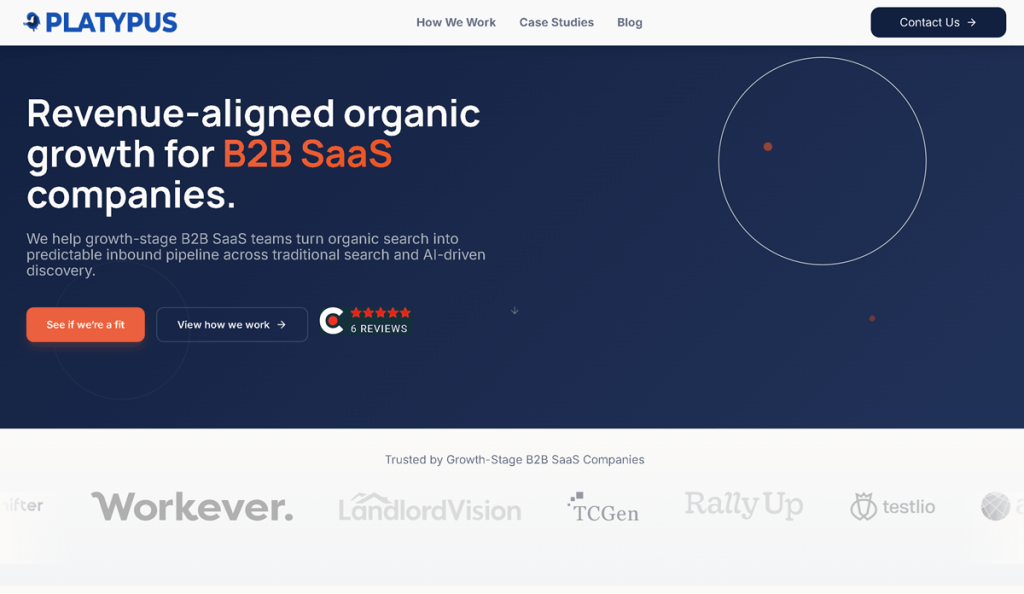
Where Refine Labs leads with paid and brand, we lead with organic and AI search as an owned, compounding channel. The intent stays the same, which is revenue-aligned pipeline, yet the route costs less and fits growth-stage budgets far better.
We run SEO, AEO and GEO, content, and CRO as one coordinated system, aligned to your funnel and your commercial goals rather than to vanity traffic. In practice, that means we work as an extension of your in-house team instead of handing over a deck and stepping back. It also means we build toward an organic growth system that moves revenue, so the work ties to demos, trials, and qualified pipeline.
We built the model for growth-stage European B2B SaaS, think roughly $5M or more in ARR, Series A or B, selling to mid-market or enterprise buyers. That focus matters, because the playbook for a scaleup looks nothing like an enterprise transformation. We also start from the search terms your buyers actually use, so content earns intent rather than empty clicks.
The bigger advantage shows up later. When the engagement matures, the rankings, the AI-search presence, and the content assets stay with you. You own them, which is the opposite of renting pipeline through paid spend.
Worth knowing: we’re organic led, not a paid-media or full-funnel ABM shop. So if your plan depends mainly on paid social and paid search at enterprise scale, a demand-gen agency makes the closer like-for-like, and we’ll tell you so.
2. Heinz Marketing
Best for: B2B teams whose pipeline problem comes down to process and alignment instead of raw channel output.
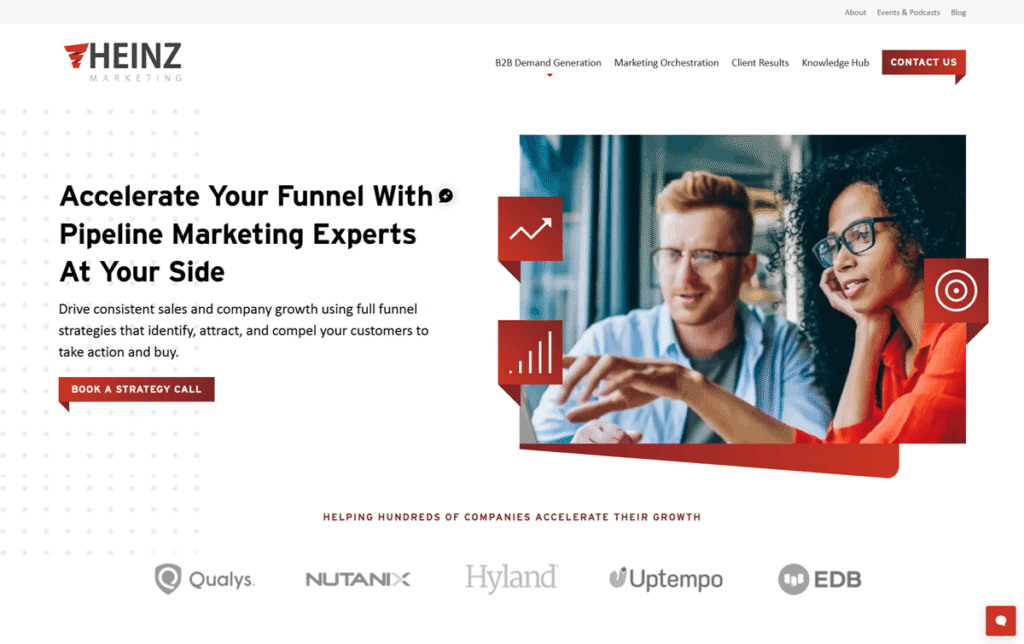
Heinz Marketing treats demand generation as the output of a working revenue process, not a set of disconnected campaigns. Founded by Matt Heinz, the firm earned its name through predictable-pipeline thinking, marketing and sales service-level agreements, and careful funnel design.
In practice, the work skews toward strategy and advisory, with execution layered on top. So if your pipeline stalls because marketing and sales pull in different directions, Heinz helps you fix the operating model rather than just buy more activity.
Worth knowing: the emphasis sits on strategy and process more than creative or paid execution. If you mainly need campaign throughput, plan to pair them with a delivery partner.
3. The Marketing Practice
Best for: mid-market to enterprise B2B with defined target-account lists and long, multi-stakeholder sales cycles.

The Marketing Practice builds around account-based marketing and integrated demand for complex, considered B2B purchases. The agency operates globally, with UK roots, and spans ABM, demand, content, and media under one roof.
Because of that scale, it shines on named-account programmes and full-funnel ABM for enterprise tech, where a single deal can justify a serious investment.
Worth knowing: the model suits ABM scale and complexity. Growth-stage teams may find it heavier, and pricier, than their stage needs.
4. Transmission
Best for: enterprise B2B that wants brand and demand run as one engine across multiple markets.
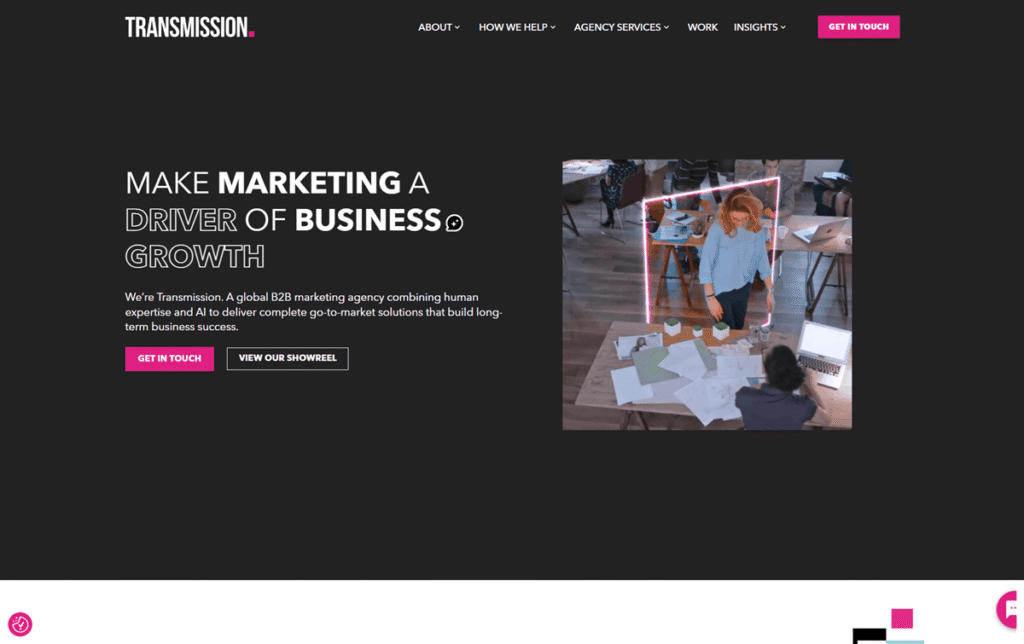
Transmission ranks among the largest independent global B2B agencies, and it spans brand-to-demand and ABM at enterprise scale. The work covers brand strategy, demand, account-based programmes, media, and creative, delivered across regions.
In ambition, it rhymes with Refine Labs, though it leans broader and more brand led. So it fits companies that want brand and demand handled together rather than as separate projects.
Worth knowing: enterprise scale brings enterprise pricing. Early growth-stage budgets won’t stretch to it.
5. Velocity Partners
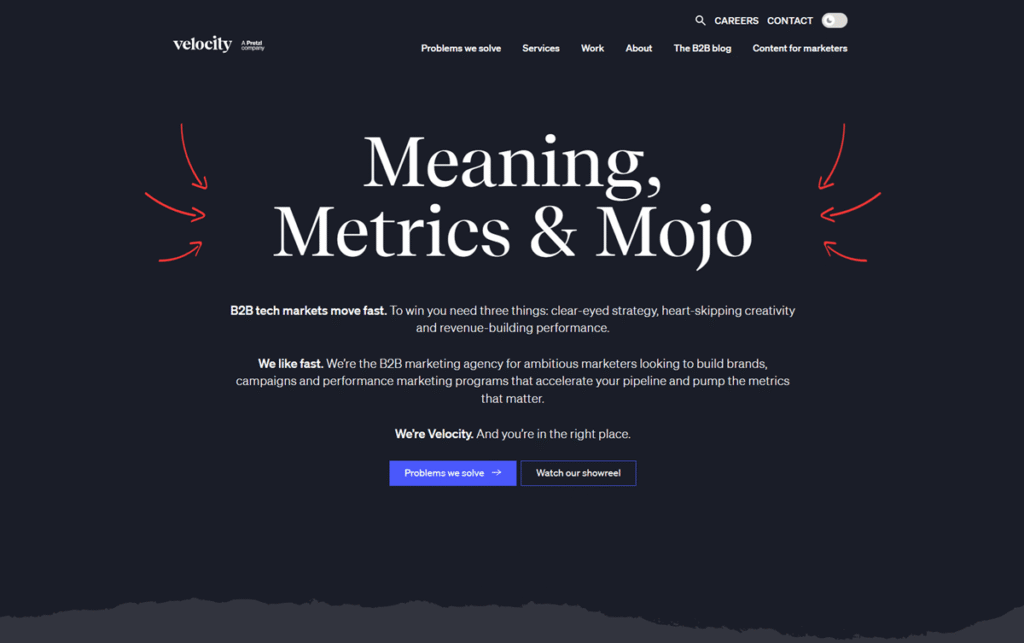
Best for: B2B SaaS that believes sharp differentiation and strong brand drive demand, and that wants a European partner.
Velocity Partners, based in London, earned its reputation on brand-led demand and unusually high-craft content. The team works across brand-to-demand, content, and creative, and it tends to win when the quality of the idea does the heavy lifting.
For European teams, the London base helps too, since the agency speaks the language of European B2B fluently.
Worth knowing: the strength sits in brand and creative. You won’t find a deep performance-paid or technical-SEO bench here.
6. Walker Sands
Best for: B2B tech that wants demand generation paired with media coverage and brand authority.
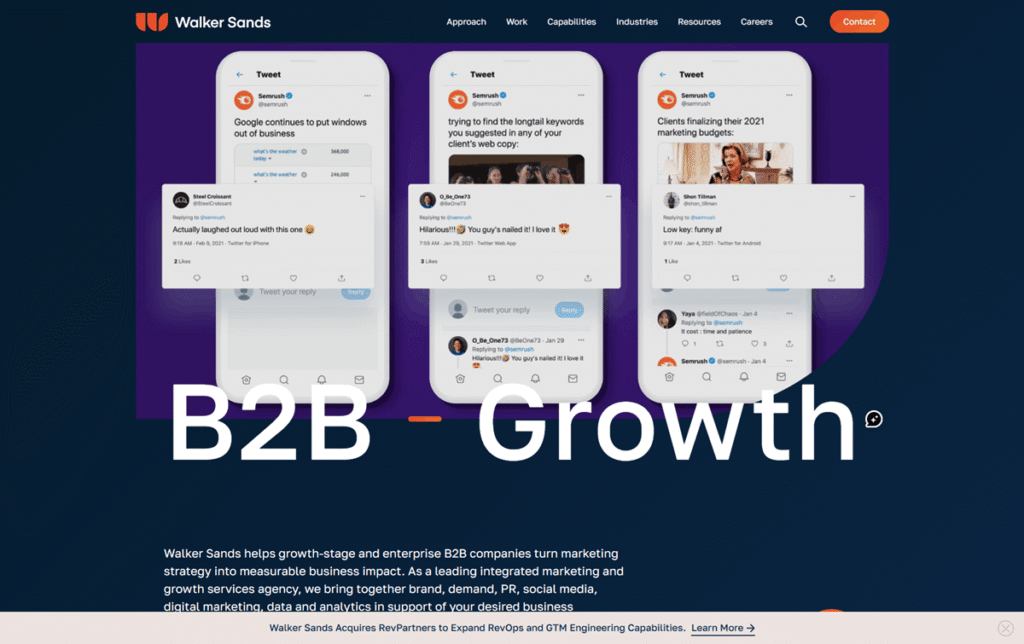
Walker Sands combines demand generation with public relations, earned media, and brand. That blend covers communications, analyst relations, brand, and web alongside demand programmes.
As a result, it suits tech companies that want credibility and coverage working in step with pipeline, rather than treating PR and demand as separate worlds.
Worth knowing: the breadth across PR and demand is the point. If you want one deep specialism instead, a more focused partner may serve you better.
7. 2X
Best for: scaleups that have the strategy and need execution horsepower without hiring.
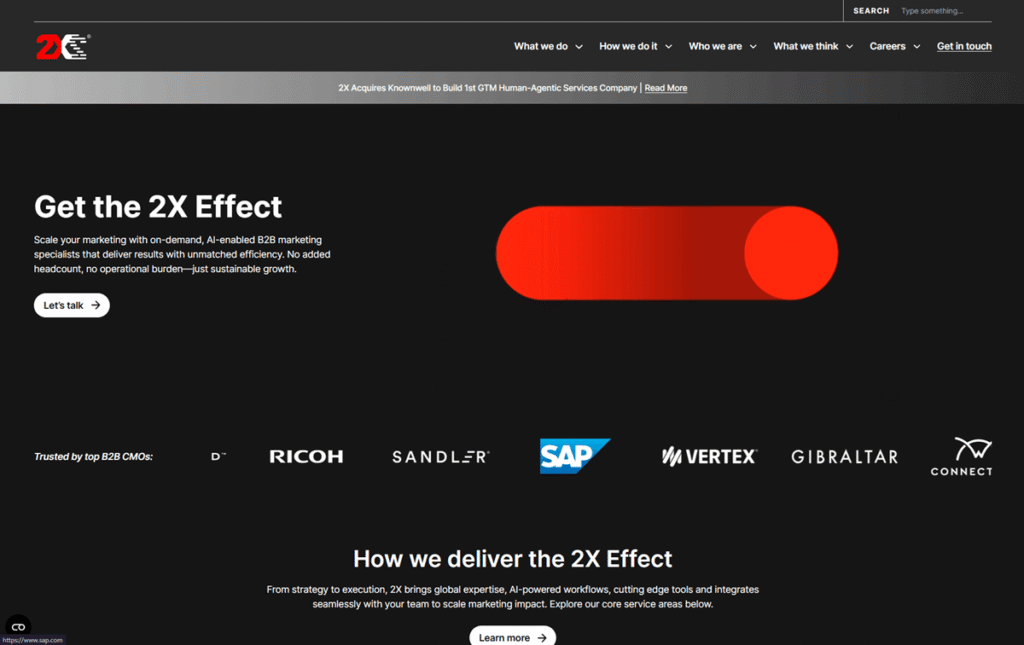
2X runs on a marketing-as-a-service model, which gives B2B SaaS teams flexible, embedded execution capacity across demand programmes. Rather than a project retainer, you get scalable teams for campaigns, content, and operations that plug into your in-house function.
Because the model adds throughput without permanent headcount, it fits teams that already know what to do but lack the hands to do it.
Worth knowing: it’s a capacity model, so you’ll usually keep ownership of strategy and direction yourself.
8. DemandLab
Best for: teams whose constraint is martech, data, and attribution rather than creative or media.
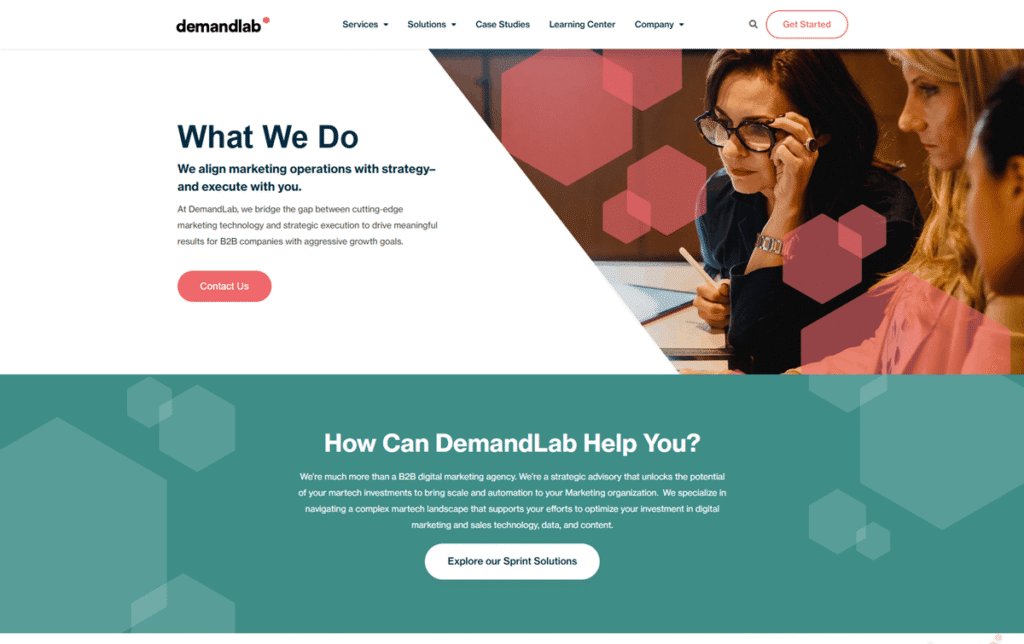
DemandLab focuses on the plumbing behind demand generation: marketing operations, martech architecture, lifecycle automation, and attribution. In other words, the agency makes your campaigns measurable and connected to revenue.
So when your bottleneck looks more like data and tooling than ideas, DemandLab fixes the layer most agencies skip.
Worth knowing: the work leans operations and martech. Pair it with a content or creative partner if that’s where your gap sits.
9. New North
Best for: earlier growth-stage B2B SaaS that wants direct access to experienced people.
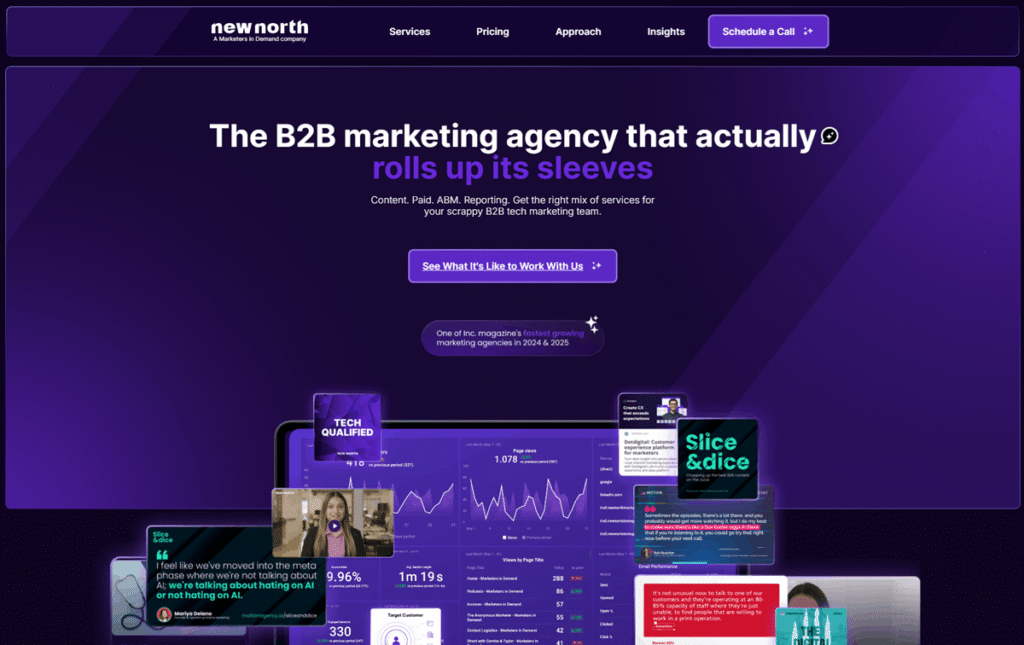
New North runs demand generation for B2B tech and SaaS, and it builds specifically for growth-stage companies that want senior attention. The work covers demand gen, content, paid, and positioning, delivered by a smaller, founder-accessible team.
That size becomes the selling point, since you get hands-on senior practitioners instead of a junior pod managing your account between larger clients.
Worth knowing: a smaller team means finite capacity. Very large, multi-region programmes may eventually outgrow it.
Match the partner to your situation
The most expensive mistake in agency selection isn’t picking the wrong price point. It’s choosing on brand reputation instead of situation fit. So before you read a single profile, use the table below to sort yourself toward the right route.
| Your situation | Route that fits | Where to look |
|---|---|---|
| Growth-stage European B2B SaaS; want revenue-aligned, owned pipeline | Organic + AI search (SEO/AEO/GEO) | Platypus SEO |
| Want demand creation philosophy at a smaller price | Content-led demand creation | New North |
| Named target-account list; long, complex sales cycles | ABM-led demand | The Marketing Practice; Transmission |
| Pipeline problem is process and alignment, not channels | Revenue process / RevOps | Heinz Marketing |
| Bottleneck is martech, data, and attribution | Marketing ops / revenue marketing | DemandLab |
| Have strategy; need execution without hiring | Marketing-as-a-service | 2X |
| Want demand paired with PR and earned media | Integrated demand + comms | Walker Sands |
| Want brand quality to drive demand; European partner | Brand-led demand | Velocity Partners |
| At $50M+ ARR, ready for org-wide transformation | Enterprise demand creation | Refine Labs itself |
Use that as a filter, not a verdict. Your situation might span two rows, in which case the profiles ahead will help you weigh the trade-offs.
The bottom line
Strip away the brand names and the decision gets simpler.
Demand creation, account-based marketing, revenue operations, and organic and AI search each solve a different version of the problem, and the right pick is the one that matches your gap.
If you’re a growth-stage European B2B SaaS team that wants organic and AI search tied directly to pipeline, talk to us at Platypus. We’ll look at your funnel, your stage, and your goals, and we’ll tell you honestly if we’re not the right fit.
Related Posts

10 Best B2B SaaS SEO Agencies in 2026
For many B2B SaaS companies, the traditional SEO model is no longer a fit. Too many SEO companies still sell…

Dragan Veselinović
Mar 11, 2026

10 Best AI Search Optimization Agencies in 2026
This guide compares ten agencies with different strengths so you can find the right fit for your stage, resources, and…
Dragan Veselinović
May 6, 2026